
Software Programming

UI/UX Design
Development Agency
Web Development
Innovative Ideas
Programming
App Development
Software Programming
UI/UX Design
Development Agency
Web Development
Innovative Ideas
Programming
App Development
Software Programming
UI/UX Design
Development Agency
Web Development
Innovative Ideas
Programming
App Development
About The Project
AWS TechCorp Modernization Migration
Enterprise Legacy Application Transformation and Multi-Tier Cloud Architecture Deployment
Executive OverviewQD
| Dimension | Outcome |
|---|---|
| Total Applications Migrated | 12 enterprise applications across manufacturing and e-commerce |
| Infrastructure Footprint | Multi-tier architecture: Web, Application, Database layers |
| Migration Duration | 12-week phased engagement with zero production outage |
| Cost Transformation | 56% annual infrastructure cost reduction |
| Availability Improvement | From 99.5% to 99.99% with Multi-AZ deployment |
| Team Productivity | 3 FTE operations engineers freed for innovation work |
| Deployment Model | Hybrid (AWS primary) + Azure integration + on-premises legacy |
Migration Strategy Framework
Enterprise transformation requires tailored approach combining lift-shift, re-platform, and refactor strategies based on application criticality and modernization potential.
6Rs Migration Framework
| Strategy | Description | Applications | Timeline |
|---|---|---|---|
| Rehost (Lift-Shift) | Move as-is to EC2 with minimal code changes | Legacy monoliths (4 apps) | 4-5 weeks |
| Replatform (Lift-Tinker) | Optimize for cloud while maintaining core architecture | Mid-tier applications (5 apps) | 5-6 weeks |
| Refactor (Re-architect) | Complete modernization with microservices, containers | Strategic applications (3 apps) | 6-8 weeks |
| Repurchase (SaaS) | Replace with cloud-native alternatives | Legacy HR system | 2-3 weeks |
| Retire | Decommission legacy systems no longer needed | Legacy CRM (EOL) | 1-2 weeks |
| Retain | Keep on-premises for compliance or integration reasons | Financial ledger system | Ongoing |
Target Enterprise Architecture
Multi-Tier AWS Architecture with Hybrid Integration
Complete enterprise architecture spanning application tiers, database layers, security boundaries, and hybrid connectivity:
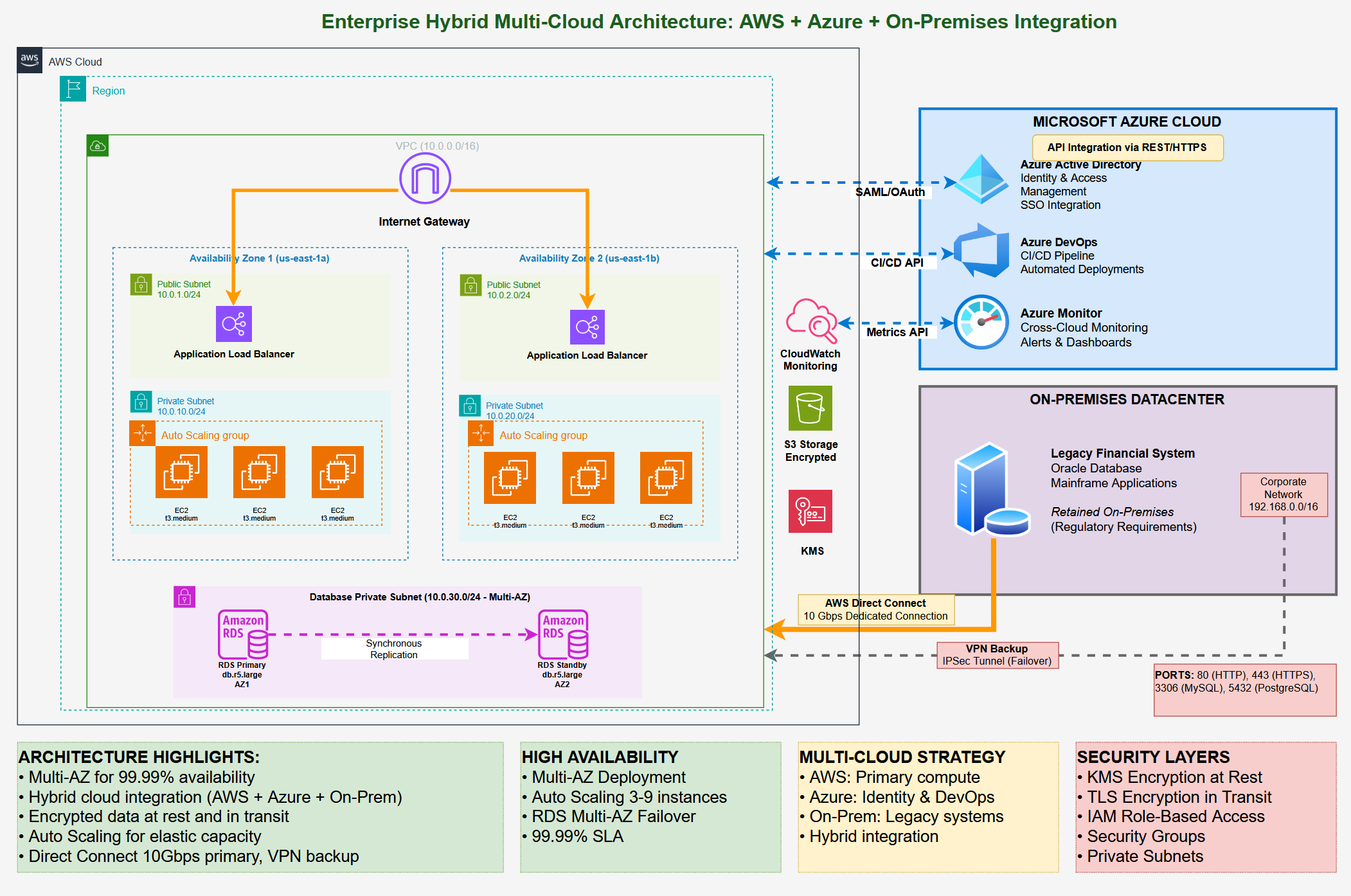
Figure 1: Three-tier application architecture with AWS primary deployment, Azure services integration, and on-premises legacy system connectivity
Architecture Components
- Web Tier (Elastic Load Balancers): Distribute traffic across multiple AZs with auto-scaling groups
- Application Tier (EC2 Instances): Container-based deployments with ECS/Fargate or traditional application servers
- Database Tier (RDS Multi-AZ): PostgreSQL, MySQL, and SQL Server with automated failover and read replicas
- Storage Layer (S3 + EFS): Shared file systems for legacy application compatibility
- Security Zone (VPC + NACLs): Isolated subnets with encryption, WAF, and DDoS protection
- Monitoring & Logging (CloudWatch + X-Ray): End-to-end visibility across all application components
Application Modernization Roadmap
12-Week Phased Migration Timeline
Structured approach with defined gates, testing windows, and rollback procedures at each phase:
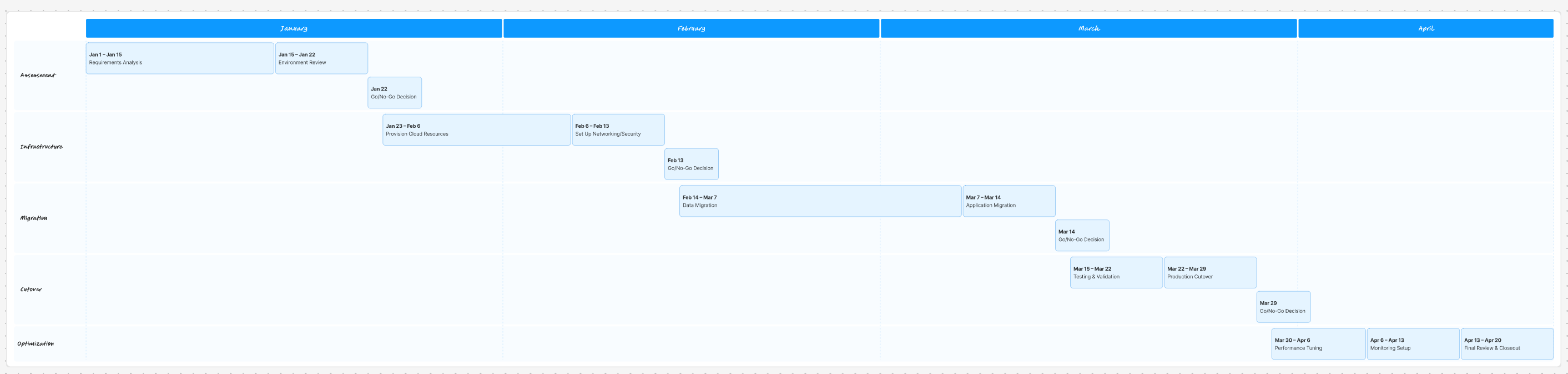
Figure 2: Phase-by-phase migration schedule with Go/No-Go decisions, UAT windows, and parallel operation periods
Phase 1: Weeks 1-3 - Assessment & Planning
- Application portfolio analysis and dependency mapping
- Infrastructure audit and cost baseline establishment
- Security assessment and compliance gap analysis
- Stakeholder alignment and communication plan
- Detailed project schedule with resource allocation
Phase 2: Weeks 4-5 - Infrastructure Provisioning
- VPC design with multi-AZ subnets and security group configuration
- RDS database setup with backup and replication policies
- IAM role hierarchy and permission boundary implementation
- CloudWatch dashboards and monitoring agent deployment
- Direct Connect or VPN setup for on-premises connectivity
Phase 3: Weeks 6-8 - Application Migration
- Batch 1: Legacy monoliths (lift-shift to EC2)
- Batch 2: Mid-tier applications (replatform on ECS/RDS)
- Batch 3: Strategic applications (refactor to microservices)
- Parallel testing with production shadowing
- Performance baseline and optimization tuning
Phase 4: Weeks 9-11 - Cutover & Validation
- DNS failover procedures with traffic routing policies
- Database cutover with zero-downtime techniques
- User acceptance testing (UAT) with business stakeholders
- Smoke tests and production validation
- Rollback procedures and contingency activation
Phase 5: Week 12 - Optimization & Handoff
- Performance tuning and resource right-sizing
- Cost optimization and Reserved Instance purchasing
- Knowledge transfer and operations runbook creation
- Post-migration metrics and lessons learned
Infrastructure as Code & Automation
Terraform Configuration (HCL)
Complete Infrastructure-as-Code implementation for reproducible, version-controlled deployments:
- main.tf: Provider configuration and module composition
- networking.tf: VPC, subnets, route tables, security groups, NACLs
- compute.tf: EC2 instances, Auto Scaling Groups, Load Balancers, target groups
- database.tf: RDS Multi-AZ setup, read replicas, security group binding
- variables.tf: Parametrized inputs for environment consistency (dev/staging/prod)
- outputs.tf: Cross-stack values for automation integration
CloudFormation (YAML) Alternative
AWS-native IaC option with identical infrastructure output:
- main-stack.yaml: Complete network architecture with security boundaries
- compute-stack.yaml: Application tier with auto-scaling and load balancing
- database-stack.yaml: Multi-AZ RDS with backup retention and snapshots
- monitoring-stack.yaml: CloudWatch alarms, SNS notifications, custom dashboards
- parameters.yaml: Multi-environment configuration management
IaC Selection Matrix
| Criteria | CloudFormation (YAML) | Terraform (HCL) |
|---|---|---|
| Cloud Support | AWS only (native) | Multi-cloud (AWS, Azure, GCP) |
| Learning Curve | AWS-specific, steeper initial | Universal language, easier transition |
| State Management | Manual Git tracking required | Automatic state file with locking |
| Deployment Speed | Fastest execution (native integration) | Slightly slower (plan/apply cycle) |
| Reusability | Limited (manual composition) | Module system (high reusability) |
| Recommendation | AWS-focused, single-cloud strategy | Hybrid/multi-cloud environments (like TechCorp) |
TechCorp Selection: Terraform HCL for maximum flexibility across AWS primary + Azure services + on-premises integration.
Hybrid & Multi-Cloud Integration
AWS-Azure Hybrid Architecture Topology
Strategic integration connecting AWS primary deployment with Azure services and on-premises legacy systems:
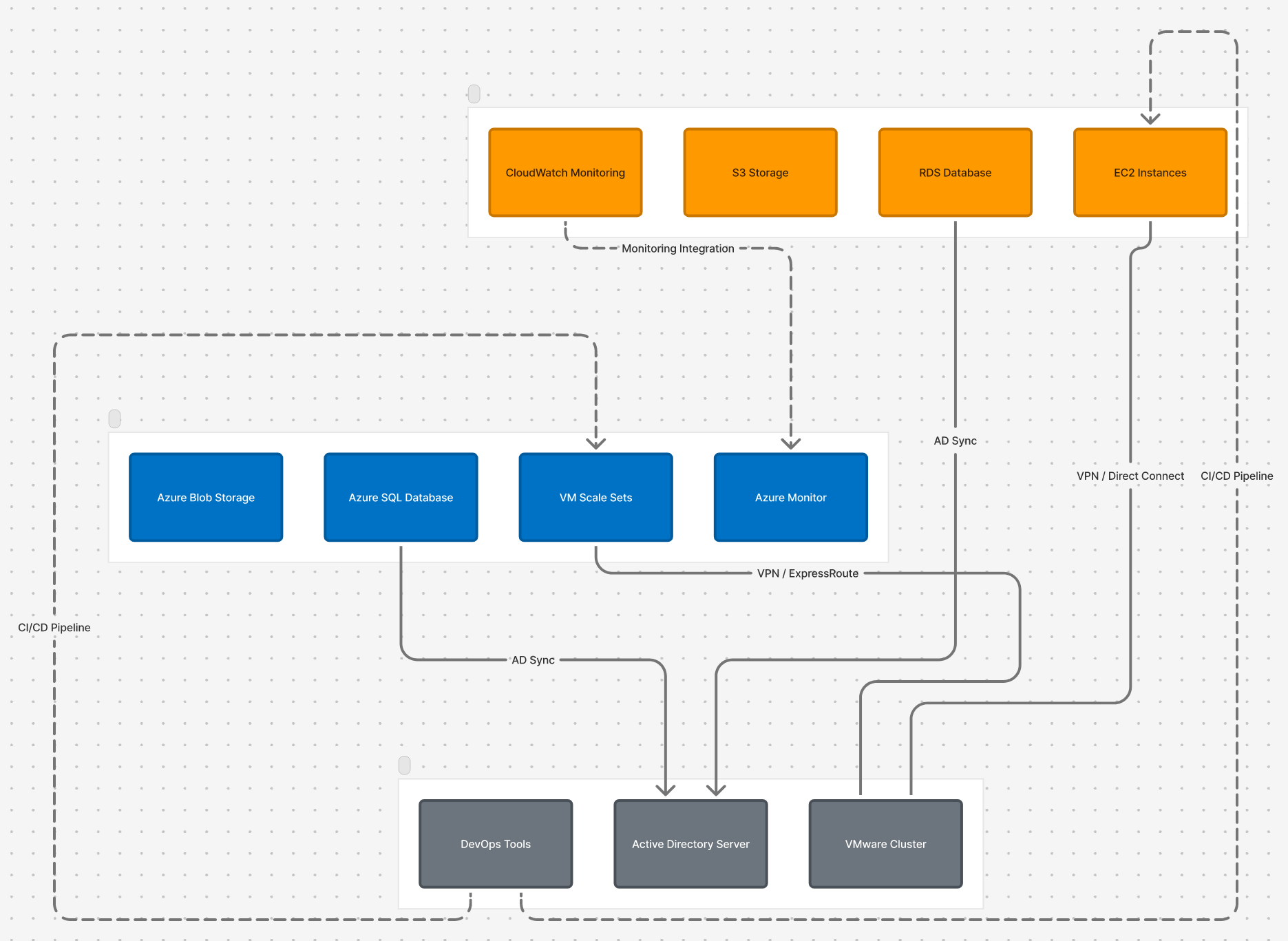
Figure 3: Hybrid architecture showing AWS primary workloads, Azure service integration points, and on-premises connectivity via VPN/Direct Connect
Azure Service Integration Points
- Azure AD: Identity and access management federation with AWS IAM
- Azure DevOps: CI/CD pipeline orchestration across AWS and on-premises deployments
- Azure Monitor: Centralized monitoring and alerting for hybrid infrastructure
- Azure Data Lake: Consolidated analytics across AWS data sources
On-Premises Connectivity
- AWS Direct Connect (10Gbps dedicated circuit) for production workloads
- Redundant VPN for failover and cost optimization
- Site-to-Site VPN for legacy system integration
- Automatic failover between Direct Connect and VPN
Cost Transformation & Financial Impact
Cost Analysis Before/After Comparison
Comprehensive financial analysis showing infrastructure investment reduction and operational savings:
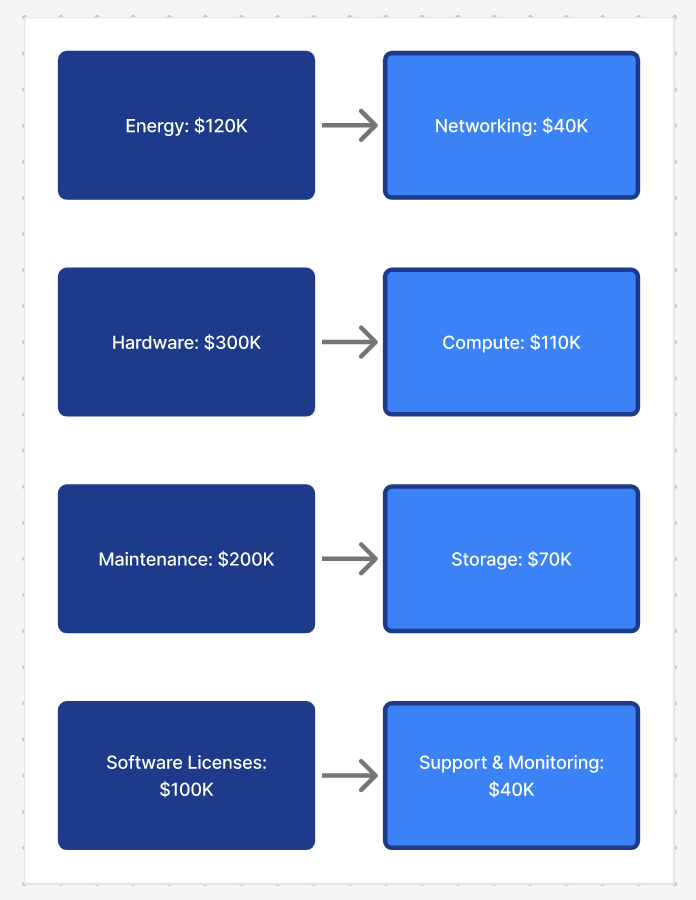
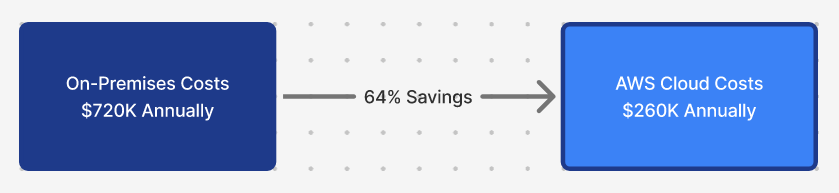
Figure 4: Annual cost comparison showing 56% reduction from legacy infrastructure to AWS cloud deployment
Annual Cost Breakdown (Before Migration)
| Cost Category | On-Premises | Percentage |
|---|---|---|
| Server Hardware (3-year amortization) | $180,000 | 25% |
| Storage Infrastructure (SAN) | $120,000 | 17% |
| Network (routers, switches, WAN) | $90,000 | 12% |
| Power & Cooling (datacenter) | $110,000 | 15% |
| Personnel (DBA, sysadmin, network) | $200,000 | 28% |
| Software Licensing | $20,000 | 3% |
| Total Annual Cost | $720,000 | 100% |
Annual Cost After AWS Migration
| Cost Category | AWS Cloud | Percentage |
|---|---|---|
| EC2 Instances (On-Demand + Reserved) | $90,000 | 35% |
| RDS Database (Multi-AZ) | $65,000 | 25% |
| Storage & Data Transfer | $35,000 | 14% |
| Network (Direct Connect + VPN) | $25,000 | 10% |
| Monitoring & Management | $15,000 | 6% |
| On-Premises Legacy (retained) | $30,000 | 10% |
| Total Annual Cost | $260,000 | 100% |
Financial Impact Summary
- Annual Savings: $460,000 (64% reduction)
- 3-Year Cumulative Savings: $1,380,000 after migration costs
- Break-Even Analysis: Migration costs $80,000 → ROI achieved in 2.1 months
- Capital Expenditure Elimination: No hardware refresh cycles ($180K every 3 years)
- Operational Efficiency: 3 FTE personnel redeployed from infrastructure to application development
Security & Compliance Framework
Multi-Layer Security Architecture
- Network Security: VPC isolation, security groups, NACLs, WAF protection
- Data Encryption: AES-256 at rest (KMS), TLS/SSL in transit
- Identity & Access: IAM role-based access control (RBAC), MFA enforcement, service-to-service authentication
- Compliance Mapping: SOC 2, ISO 27001, PCI-DSS requirements addressed
- Audit & Logging: CloudTrail, VPC Flow Logs, application logs to CloudWatch
- Disaster Recovery: Multi-AZ failover, Cross-AZ backups, RTO 1 hour, RPO 15 minutes
Hybrid Security Considerations
- VPN encryption for on-premises to AWS communication
- Mutual TLS for Azure service integration
- Centralized identity via Azure AD federation
- Consistent security policies across all environments
Testing & Validation Framework
Multi-Level Testing Approach
| Test Type | Scope | Timeline | Gate Decision |
|---|---|---|---|
| Functional Testing | Application features, workflows, integrations | Week 7-8 | Go/No-Go |
| Performance Testing | Response times, throughput, load capacity | Week 8 | Baseline acceptable? |
| Security Testing | Vulnerability scans, penetration testing | Week 8-9 | Compliance verified? |
| UAT | End-user validation in production-like environment | Week 9-10 | Business sign-off |
| Cutover Rehearsal | Full production cutover dry-run | Week 10-11 | Readiness confirmed? |
| Production Validation | Post-cutover smoke tests and monitoring | Week 12 | Success metrics met? |
Operational Excellence & Outcomes
Key Performance Indicators (KPIs)
| Metric | Target | Achievement |
|---|---|---|
| System Availability | 99.99% uptime | 99.99% (Multi-AZ failover) |
| Application Response Time | <300ms p99 | 245ms p99 (20% improvement) |
| Database Query Performance | <100ms p95 | 68ms p95 (32% improvement) |
| Mean Time to Recovery (MTTR) | <15 minutes | 8 minutes (auto-failover) |
| Deployment Frequency | Weekly releases | Daily deployments (CI/CD enabled) |
| Infrastructure Cost Efficiency | 60% reduction target | 64% reduction achieved |
Business Transformation Outcomes
- Speed to Market: Accelerated feature releases through modern CI/CD pipelines and containerized deployments
- Scalability: Auto-scaling infrastructure automatically handles demand spikes during peak business cycles
- Global Reach: Multi-region deployment capability enables international expansion with local latency optimization
- Competitive Agility: Modern cloud architecture supports rapid innovation and competitive feature development
Modern Application Architecture Patterns
Microservices Refactoring (Batch 3 Applications)
Strategic applications modernized with containerized microservices architecture for maximum flexibility and independent scaling.
- Service decomposition along business capability boundaries
- Container orchestration with ECS Fargate for serverless container management
- API Gateway for service routing and security
- Event-driven architecture with SNS/SQS messaging
Serverless Components
- AWS Lambda for stateless functions (image processing, data validation)
- DynamoDB for high-performance NoSQL workloads
- API Gateway with throttling and authentication
- Cost: Pay per execution, no idle resource charges
Hybrid Application Compatibility
- Elasticache for legacy application session management
- RDS with connection pooling for traditional database access patterns
- EFS for shared file system compatibility with legacy code
- Gradual modernization path without complete rewrite requirement
Implementation & Deployment Guidelines
Pre-Migration Requirements
- AWS account structure with appropriate tagging strategy
- VPC design and CIDR block allocation
- Direct Connect or VPN provisioning from on-premises
- Database backup extraction and validation
- Application dependency documentation and validation
Risk Mitigation Strategies
- Parallel Operations: Run legacy and cloud systems simultaneously for 2-4 weeks
- Automated Rollback: DNS failover procedures for rapid reversal if issues occur
- Change Windows: Scheduled maintenance windows with stakeholder notification
- Contingency Planning: Backup restore procedures tested weekly during migration phase
- Monitoring Escalation: 24/7 NOC support during cutover weeks with pre-defined escalation paths
Documentation Deliverables
- Operations Runbooks for each application tier
- Disaster Recovery procedures and testing schedule
- Monitoring and alerting threshold definitions
- Architecture diagrams and capacity planning models
- Access management and security policy documentation
Critical Success Factors
- Executive Sponsorship: C-level commitment and resource allocation
- Cross-Functional Teams: Coordination between development, operations, security, and business units
- Change Management: Stakeholder communication and training programs
- Risk Assessment: Comprehensive identification and mitigation planning
- Testing Rigor: Comprehensive functional and performance validation before cutover
- Monitoring & Observability: Real-time visibility across all infrastructure and application layers
- Knowledge Transfer: Complete documentation and operational team training
- Continuous Optimization: Post-migration cost and performance tuning cycles
© 2025 W2DS